
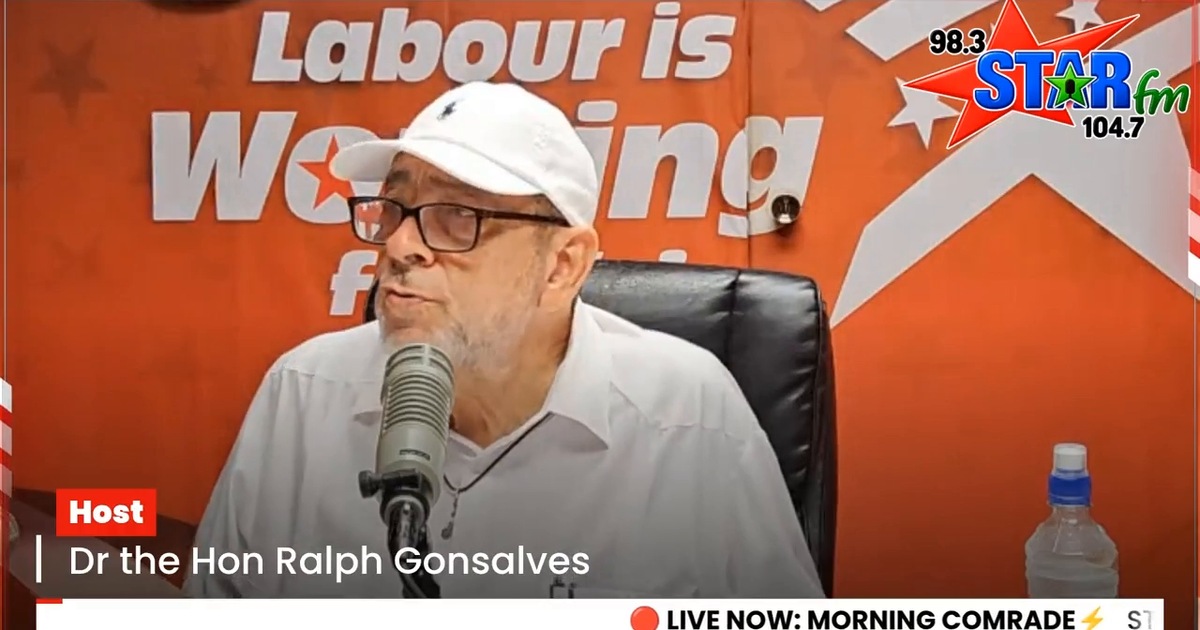
Former St. Vincent and the Grenadines prime minister Dr. Ralph E. Gonsalves has joined other former Caribbean Community (CARICOM) leaders in a public appeal for countries to support a United Nations resolution calling for an end to the United States’ economic, commercial and financial embargo on Cuba. The Ralph Gonsalves Cuba embargo appeal comes ahead of a UN General Assembly vote scheduled for October 28, 2026.
By Vincypowa News Staff | October 25, 2026
The open letter, dated October 24 and addressed to governments worldwide, calls for support for the recurring UN resolution and argues that the restrictions undermine Cuba’s sovereignty and worsen the hardships facing its people. Its language is forceful, but several regional news organizations have published conflicting lists of the signatories. Gonsalves is named consistently in those accounts.
Ralph Gonsalves Cuba embargo appeal ahead of UN vote
The former leaders say countries should resist pressure from Washington to oppose the resolution. In the statement reported across the region, they characterize U.S. policy as inhumane and argue that restricting Cuba’s access to energy compounds an already severe humanitarian and economic crisis. Their legal and political assessments are the signatories’ assertions, not findings independently established by Vincypowa News.
The appeal is significant for St. Vincent and the Grenadines because Gonsalves, now ULP leader and opposition leader, continues to take positions on international issues after leaving the prime minister’s office. Cuba has longstanding diplomatic, medical, and educational relationships across the Caribbean, making the issue larger than relations between Havana and Washington alone. In a Washington keynote reported previously by Vincypowa News, Gonsalves called U.S. hostility toward Cuba “unnatural and unnecessary,” providing context for his latest stand.
Conflicting reports on who signed
There is an unresolved discrepancy in the reporting about the number of former leaders who signed the appeal. Regional reporting published October 24 named eight, while the Jamaica Gleaner on October 25 identified nine, adding former Trinidad and Tobago prime minister Keith Rowley. The Jamaica Observer on October 25 reported ten, including former Belizean leader Dean Barrow and former Saint Lucian leader Kenny Anthony, but not Rowley.
Eight names appear across the accounts: Freundel Stuart of Barbados; Said Musa of Belize; Keith Mitchell and Tillman Thomas of Grenada; Donald Ramotar of Guyana; Bruce Golding and P. J. Patterson of Jamaica; and Ralph Gonsalves of St. Vincent and the Grenadines. The original signed document has not been independently authenticated to resolve whether additional names were omitted, added later, or reported incorrectly. Vincypowa News therefore does not present any single reported count as definitive.
What the United States actually changed
The Ralph Gonsalves Cuba embargo appeal also criticizes U.S. measures involving countries that supply energy to Cuba. On January 29, 2026, President Donald Trump signed Executive Order 14380, which established a framework for additional tariffs on imports from countries providing oil to Cuba. Washington described Cuba’s government as a national security threat and said the policy was intended to protect U.S. interests.
However, on February 20, the White House issued Executive Order 14389, ending the additional import duties imposed under that January authority. The broader U.S. embargo and other Cuba-related restrictions were not repealed by that order. It would therefore be inaccurate to suggest that the January additional tariff system remains in force unchanged, or that ending those particular tariffs ended the embargo.
The United Nations vote

The UN General Assembly is expected to consider the annual resolution on October 28. Its votes on the embargo express the position of member states but do not, by themselves, repeal U.S. sanctions laws. According to the official UN record, the 2025 resolution was adopted on October 29 with 165 votes in favor, seven against and 12 abstentions, with nine countries not voting.
The former CARICOM leaders are asking states to reaffirm that position this year. Their appeal raises a test for Caribbean governments navigating regional ties with Cuba and their economic and diplomatic relationships with the United States.
Ralph Gonsalves Cuba embargo: What position will SVG take?
For Vincentians, the immediate question is how the government led by Prime Minister Dr. Godwin Friday will approach the October 28 vote. Gonsalves has made his position clear by joining the former leaders’ appeal, but his position does not determine the vote of the current government. At the time of writing, Vincypowa News has not independently verified an official statement setting out how the Vincentian delegation will vote. The Ralph Gonsalves Cuba embargo appeal represents his public position, not a confirmed decision by the current government.
The government’s vote, once recorded, will provide a concrete basis for assessing whether its approach continues St. Vincent and the Grenadines’ longstanding diplomatic support for ending the embargo. That assessment should be made from the actual UN record rather than speculation about a decision that has not yet been taken.
Reporting sources: WiredJA; Caribbean Media Corporation regional report; Jamaica Gleaner; Jamaica Observer; White House; United Nations Digital Library.


Leave a Reply