
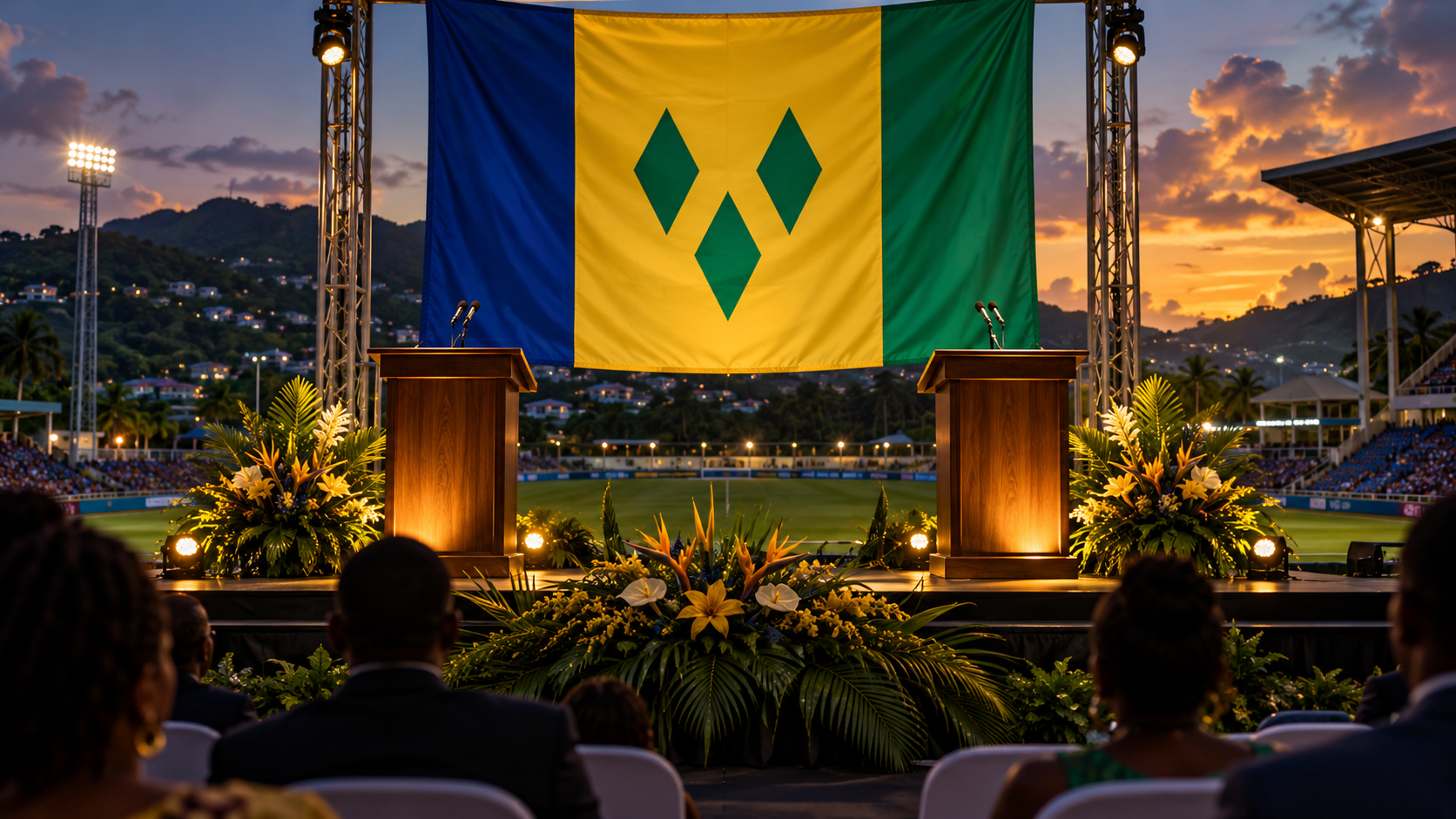
The UN Cuba embargo vote 2026 passed by a wide margin on October 28, but global support fell sharply and Caribbean governments took sharply different positions. St. Vincent and the Grenadines voted in favor of ending the U.S. embargo.
By VINCYPOWA News Staff | October 28, 2026
UNITED NATIONS, New York — The United Nations General Assembly adopted its annual resolution calling for an end to the United States’ economic, commercial, and financial embargo against Cuba on Wednesday, October 28, with 130 votes in favor, 17 against, and 25 abstentions. Another 21 UN members did not participate in the vote.
The Cuba embargo vote sustained the General Assembly’s longstanding opposition to the embargo, but also marked a dramatic deterioration in Cuba’s diplomatic support. The resolution drew 165 votes in favor in 2025 and 187 in 2024. This year’s total was 35 fewer than last year and 57 fewer than two years ago.

The adopted draft, A/81/L.5, again called for the embargo’s termination. The vote is politically significant, but the resolution is nonbinding and does not itself change U.S. sanctions law.
Cuba Embargo Vote: SVG Supports Resolution as CARICOM Divides
St. Vincent and the Grenadines voted in favor of the resolution, according to Caribbean Media Corporation reporting. Grenada, St. Kitts and Nevis, Belize, Suriname, and The Bahamas were also listed among supporters.
But regional unity was not complete. Trinidad and Tobago voted against the measure, while Jamaica, Guyana, and Haiti abstained. Antigua and Barbuda, Dominica, and Saint Lucia were reported absent when voting took place.
The differences are notable within a Caribbean Community that has historically maintained close ties with Cuba, including medical, educational, diplomatic, and disaster-response cooperation. The vote does not, on its own, establish a coordinated change in CARICOM policy; it does reveal competing approaches among member governments.
Reporting note: Some published country-by-country tallies conflict on Barbados. VINCYPOWA News is excluding its individual position from this account pending confirmation from the definitive UN roll-call record.
Jamaica Explains Why It Abstained
Jamaica’s foreign affairs minister, Kamina Johnson Smith, said the government had been reassessing the issue and wanted a wider approach that addressed both the harmful effects of the embargo and reforms within Cuba.
She argued that the Cuban people’s welfare should be central, with constructive U.S.-Cuba engagement, economic and institutional change, and respect for fundamental freedoms. Jamaica said it neither endorsed unilateral pressure nor believed the annual resolution sufficiently captured the full scope of the crisis.
That explanation illustrates why an abstention should not automatically be described as support for the embargo. It can also signal disagreement with the wording or scope of a resolution.
Friday and Gonsalves Both Opposed the Embargo
The Vincentian vote continued a position articulated by leaders on opposite sides of the country’s political divide.
At the 81st UN General Assembly in September 2026, Prime Minister Dr. Godwin Friday publicly called for the embargo to end and described Cuba as a valued part of the Caribbean community. The vote by St. Vincent and the Grenadines is consistent with that statement.
Meanwhile, Opposition Leader and former Prime Minister Dr. Ralph Gonsalves joined 10 other former Caribbean heads of government in an October appeal urging UN members to support the resolution.
That appeal also included former Trinidad and Tobago Prime Minister Keith Rowley and former Jamaican Prime Ministers Bruce Golding and P.J. Patterson, providing a revealing contrast with the choices made by the current Trinidadian and Jamaican administrations.
VINCYPOWA News previously reported on the appeal by Gonsalves and other former CARICOM leaders to end the Cuba embargo.
Why the UN Cuba Embargo Vote 2026 Lost Support
The decline in favorable votes followed a sustained U.S. diplomatic campaign encouraging countries to oppose the measure or abstain. Reuters reported that several governments, including Germany and Italy, changed their positions and abstained.
U.S. Ambassador Mike Waltz welcomed the changes, arguing that the additional opposition reflected growing concern about Cuba’s political system and human rights record. Washington maintains that Cuba’s own economic policies are a major cause of the country’s difficulties.
Cuban Foreign Minister Bruno Rodríguez Parrilla countered that U.S. restrictions have worsened shortages of fuel, medicines, food, and other essentials. Cuba’s government argues that the sanctions impose severe costs on ordinary families.
Those competing explanations are not mutually exclusive: the embargo restricts economic activity, while Cuba’s domestic policies and structural weaknesses are also relevant to its economic conditions. The humanitarian impact on the Cuban population remains a central concern.

What the Vote Means — and What It Does Not
The result means a clear majority of countries voting continued to demand that the embargo end. It does not mean the embargo has been repealed. U.S. laws and executive sanctions remain in effect unless American authorities change them.
Equally important, the reduction in support shows that the diplomatic balance around Cuba is changing. In 2024, opposition to the embargo appeared almost universal at the General Assembly. In 2026, more governments were willing either to challenge the resolution or withhold their endorsement.
For Caribbean governments, the Cuba embargo vote creates difficult questions about sovereignty, solidarity with Cuban civilians, U.S. relations, human rights, and regional cohesion.
Questions for Caribbean Governments
Will CARICOM issue a common explanation of the fractured vote? What prompted Trinidad and Tobago’s departure from the long-established regional pattern? How will Jamaica and Guyana define their policy toward Cuba after abstaining? And will Saint Vincent and the Grenadines take additional diplomatic or humanitarian steps consistent with its vote?
For Vincentians, the notable point is that support for ending the embargo was expressed both by the current NDP administration and by prominent figures from the former ULP government.
VINCYPOWA News will continue to examine the official roll call and responses from Caribbean governments as the implications of the vote become clearer.
Sources
United Nations: General Assembly, 81st session, 28th plenary meeting, October 28, 2026 (automatically generated transcript; verify against formal UN meeting records when available).
Reuters: UN vote and U.S. diplomatic campaign, October 28, 2026.
Jamaica Gleaner: Former CARICOM leaders appeal for end to Cuba embargo, October 25, 2026.
St. Vincent Tribune / One News SVG: Prime Minister Friday’s September 2026 UN position.


Leave a Reply