
The Royal Caribbean Sandals deal, an announced agreement by Royal Caribbean Group to acquire a 50% interest in Sandals and Beaches Resorts for approximately US$3 billion, raises a larger question for Caribbean economies: who benefits as major tourism businesses expand their influence? Royal Caribbean disclosed the agreement in a September 23, 2026 filing with the U.S. Securities and Exchange Commission. The proposed transaction is expected to close in early 2027, subject to approvals and conditions. It should not be described as completed.
Royal Caribbean Sandals deal: A partnership that could reshape tourism
Sandals, founded in Jamaica by Gordon “Butch” Stewart, is one of the Caribbean’s best-known hospitality brands. The Royal Caribbean Sandals deal would combine Royal Caribbean’s cruise and travel reach with Sandals’ established resort operations. The agreement concerns a 50% interest, not a majority acquisition.
Large investments can support jobs, tourism promotion, infrastructure and local suppliers. They can also raise legitimate questions about competition, purchasing practices, profit flows and the negotiating position of small island economies.

Antigua draws a line on beach access
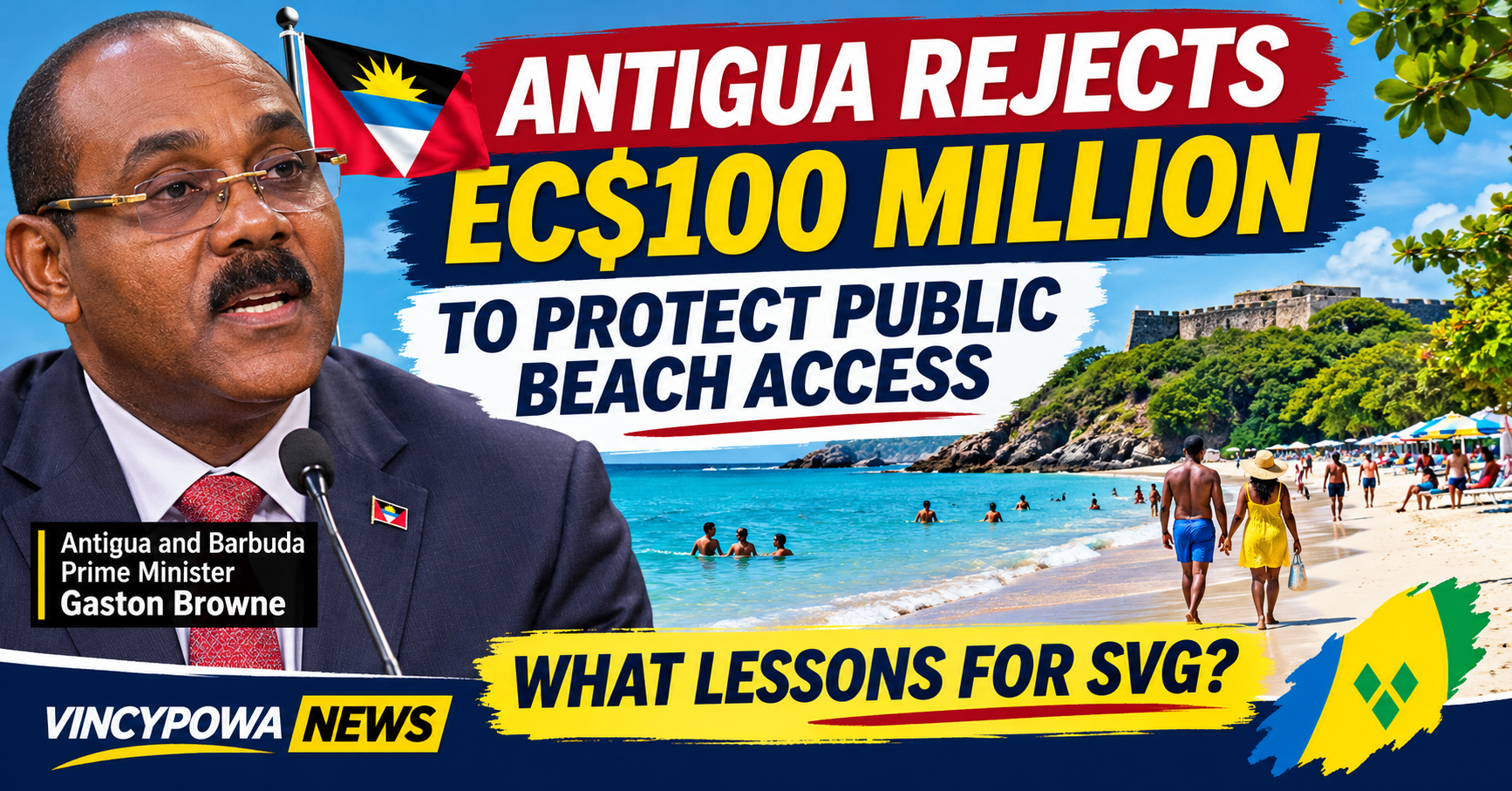
In a separate development, Antigua and Barbuda Prime Minister Gaston Browne said his government rejected a proposed EC$100 million Royal Caribbean investment at Fort James because the company sought exclusive beach access. The Jamaica Gleaner reported his remarks on November 22, 2026.
The specific proposed contractual terms have not been independently examined for this article. Antigua’s reported decision nevertheless highlights the importance of weighing public access alongside promised investment.
What does it mean for St. Vincent and the Grenadines?
Sandals operates in St. Vincent and the Grenadines. Separately, SVG has signed a 30-year cruise port concession with Global Ports Holding. For more on the public-interest questions surrounding that arrangement, read VINCYPOWA NEWS’ investigation, The Price of Thirty Years. Royal Caribbean and Global Ports Holding are different companies; there is no established evidence that the Sandals transaction gives Royal Caribbean control of SVG’s cruise port.
The relevant public-interest questions concern the safeguards governments negotiate: Will local taxi operators, vendors, farmers and service providers receive fair opportunities? What protections preserve access to beaches and waterfronts? How are investment promises monitored? How much visitor spending remains in local economies?
Investment and sovereignty
Foreign investment is not inherently a threat to sovereignty. Caribbean governments can welcome investment while insisting on transparent agreements, environmental safeguards, local participation and protection of public rights.
Neither the proposed Sandals transaction nor Antigua’s reported rejection establishes wrongdoing. Together they provide a reason to examine the terms under which tourism investments are welcomed and how benefits are shared.
A billion-dollar investment is impressive. But the true measure of development is not merely how much money enters a country. It is how much lasting value remains for its people.
Related VINCYPOWA NEWS investigation: Antigua Rejects EC$100 Million to Protect Public Beach Access. What Lessons for SVG? This separate report examines public access and the SVG cruise concession.
Sources
Jamaica Gleaner, November 22, 2026; Royal Caribbean Group corporate information; Royal Caribbean SEC Form 8-K, September 23, 2026; Royal Caribbean and Sandals partnership announcement.

Leave a Reply